An interview on the evolution of Gunfire Lullabies

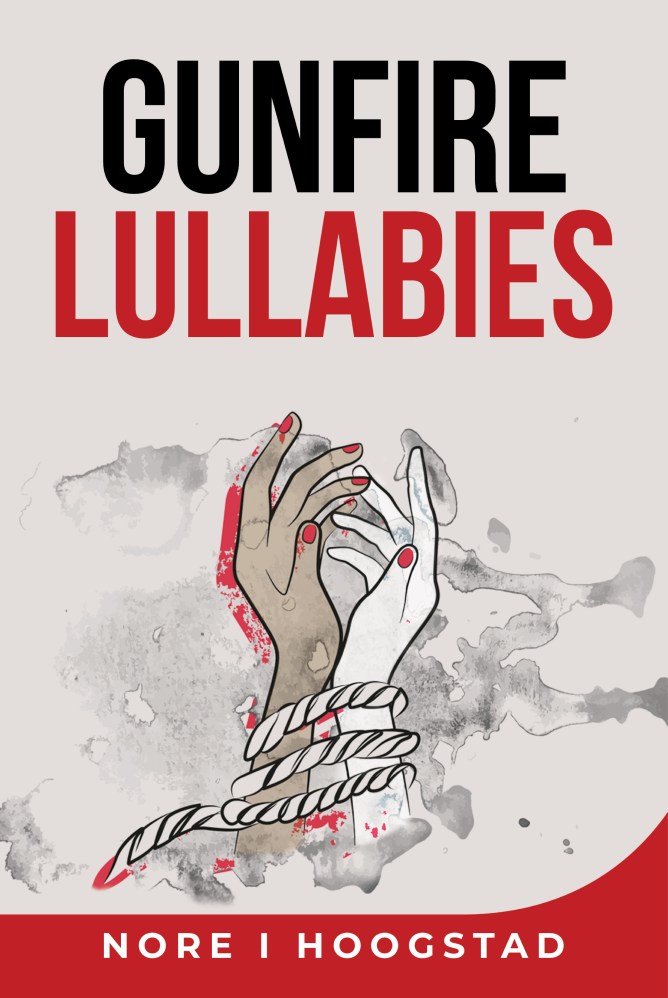
I was interviewed by Andrea Barton of Brightside Story Studio about my recently released novel, Gunfire Lullabies.

Andrea is an editor I hired during the latter stages of my novel’s development, and I can highly recommend her work.

The article begins like this, but you can read the full interview here

“With her background as an Australian diplomat based in Indonesia and East Timor, Nore is ideally placed to write about East Timor’s independence struggle. Her debut novel places two female characters against the background of this political maelstrom. Join us as we discuss the evolution of Gunfire Lullabies.”

Gunfire Lullabies is released!

I am beside my self with excitement at the release of my novel. It’s taken me years.

You can purchase it here on my website in the Buy My Book tab.

Want to know more? Here’s a bit about it…

Jakarta, 1998. Junior Australian diplomat Ava Vuyk is on her first overseas posting when she’s assigned the conflict-ridden issue of East Timor with its twenty-three year independence struggle. The new Indonesian regime announces a vote in which the East Timorese will choose their future, but the military and local militia oppose it, launching a brutal campaign of terror and destruction. Amid the turmoil, Ava must decide whether she’ll gloss over the spiralling violence as her domineering ambassador demands, or report the truth in the hope the Australian government will intervene. 

In East Timor, teenage farmer Isabel is kidnapped by militia leader Gabriel as his sex slave after her brother escapes into the jungle rather than join his group. Alone but hopeful, she waits to be rescued. When a human rights group asks her to spy on Gabriel, she’s seduced by the promise she’ll be reunited her with her family.

Gunfire Lullabies—written by former diplomat, political advisor and press secretary Nore Hoogstad—is a gut-wrenching fictionalised account inspired by real life events that won’t fail to fascinate and enthral.

“Highly recommended. Nore guides us through the conflict in East Timor, and a clash between official duties in service of the state, versus human convictions and emotions. Each of us has a choice to make, whether to fulfil our contractual duty or our higher moral one; the dictates of the state versus those of the soul.”
J. Ramos-Horta, President of Timor-Leste, 2007-2012

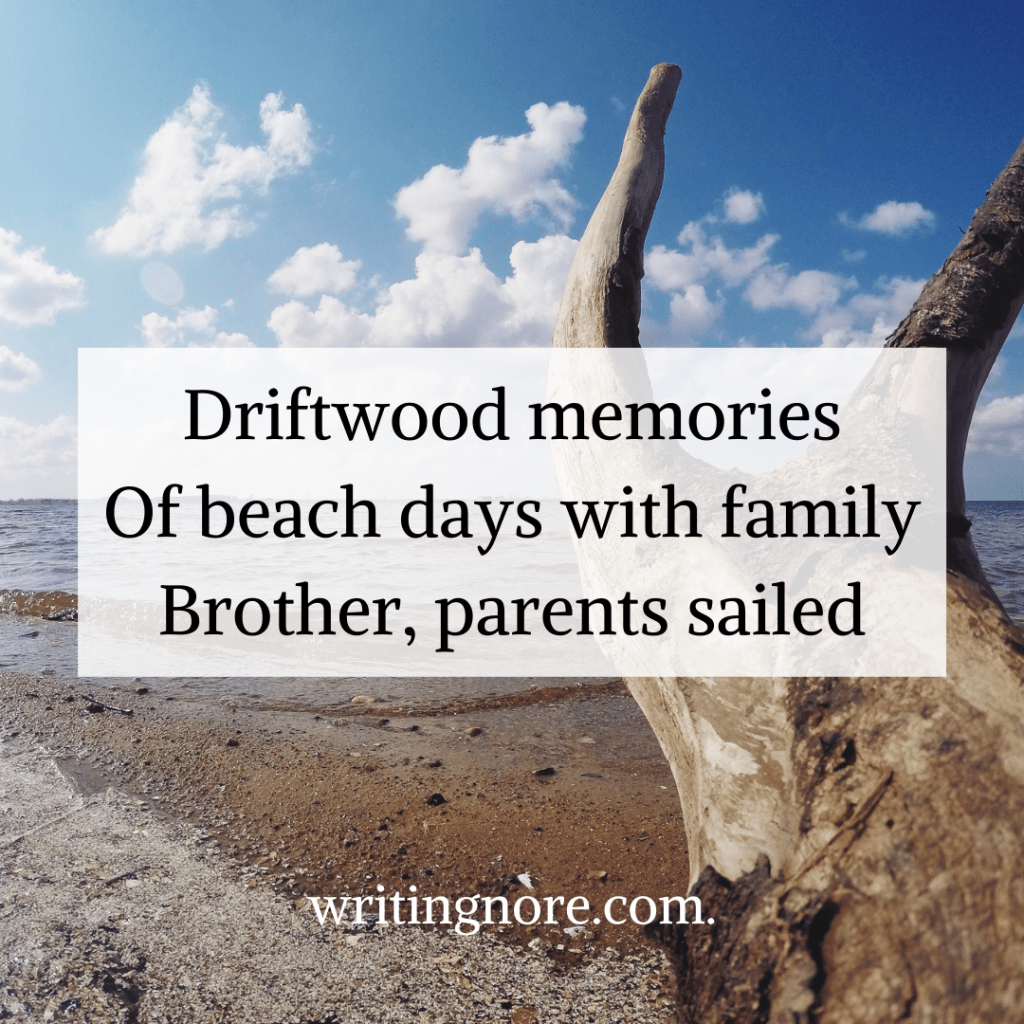
Family Haiku

Tomorrow is an anniversary for one of my parent’s deaths.

Tonight I was watching TV and saw pieces of driftwood being hauled into the sea. It sparked memories of holidays and a driftwood keepsake my father kept as a memento.

I wrote a haiku for his funeral, and here’s another one on the eve of his death anniversary. It’s interesting how the smallest images or smells or sounds can make you remember.
Remember the Nuremberg Code

  1. The voluntary consent of the human subject is absolutely essential.
    This means that the person involved should have legal capacity to give consent; should be so situated as to be able to exercise free power of choice, without the intervention of any element of force, fraud, deceit, duress, over-reaching, or other ulterior form of constraint or coercion; and should have sufficient knowledge and comprehension of the elements of the subject matter involved, as to enable him to make an understanding and enlightened decision. This latter element requires that, before the acceptance of an affirmative decision by the experimental subject, there should be made known to him the nature, duration, and purpose of the experiment; the method and means by which it is to be conducted; all inconveniences and hazards reasonably to be expected; and the effects upon his health or person, which may possibly come from his participation in the experiment. 
    The duty and responsibility for ascertaining the quality of the consent rests upon each individual who initiates, directs or engages in the experiment. It is a personal duty and responsibility which may not be delegated to another with impunity.
  2. The experiment should be such as to yield fruitful results for the good of society, unprocurable by other methods or means of study, and not random and unnecessary in nature.
  3. The experiment should be so designed and based on the results of animal experimentation and a knowledge of the natural history of the disease or other problem under study, that the anticipated results will justify the performance of the experiment.
  4. The experiment should be so conducted as to avoid all unnecessary physical and mental suffering and injury.
  5. No experiment should be conducted, where there is an a priori reason to believe that death or disabling injury will occur; except, perhaps, in those experiments where the
    experimental physicians also serve as subjects.
  6. The degree of risk to be taken should never exceed that determined by the humanitarian importance of the problem to be solved by the experiment.
  7. Proper preparations should be made and adequate facilities provided to protect the experimental subject against even remote possibilities of injury, disability, or death.
  8. The experiment should be conducted only by scientifically qualified persons. The highest degree of skill and care should be required through all stages of the experiment of those who conduct or engage in the experiment.
  9. During the course of the experiment, the human subject should be at liberty to bring the experiment to an end, if he has reached the physical or mental state, where continuation of the experiment seemed to him to be impossible.
  10. During the course of the experiment, the scientist in charge must be prepared to terminate the experiment at any stage, if he has probable cause to believe, in the exercise of the good faith, superior skill and careful judgement required of him, that a continuation of the experiment is likely to result in injury, disability, or death to the experimental subject.

[“Trials of War Criminals before the Nuremberg Military Tribunals under Control Council Law No. 10”, Vol. 2, pp. 181-182. Washington, D.C.: U.S. Government Printing Office, 1949.]

Two publishing offers and the decision to self publish

Me the moment I decided to self publish

A couple of years ago I received two publishing offers for my fiction manuscript, Gunfire Lullabies. Can you imagine my joy? I’d slaved over this this book to get it to a high standard, and after considerable interest but no final offer with other publishers, my book and writing was finally about to be formally realised.

One offer was with a small independent publisher and the other was with a more academic publisher, but with restricted conditions. I decided to go with the first offer, even though I’d checked them out and had a few concerns.

After dilly dallying for 18 months, which included months of no communication at all, and missing the golden opportunity to publish my book on the 20th anniversary of the East Timor independence ballot during which it’s set, the publisher pulled out. This was despite a legal opinion from Australia’s top publishing barrister that my novel was good to go.

My disgust and relief were palpable. It was like escaping an abusive relationship. My gut feeling about this publisher had been spot on, which is far easier to say in hindsight.

I decided to do another line edit that took my novel to a new level and sent it to an agent who was a contact of several published writers I knew. This was a mistake as they had a commercial focus, and my book is crossover literally–commercial. Their response was, shall we say, discordant.

I could have gone back to publishers previously interested in my novel or taken it to others. But I asked myself what did I really want?

The answer was creative control. In the end, it’s simple when you work out what your one priority is.

I’m confident about my novel and don’t want to cut out a character, component or the entire literary element to reduce the word count from 113,00 down to 90,000. I couldn’t bare to receive yet another, may I say divergent opinion on one character or another, or to wait to find out whether someone finds my writing style either beautiful or too something or other. You get the idea. I’m not new to the writing game, and while editors’ and agents’ opinions may be informed by professional experience, they’re nonetheless subjective and vary wildly. And really, you could go on perfecting and altering a manuscript or painting for a lifetime.

So I came the decision to self publish. I’d considered it before, but had previously associated it with failure. These days, many formally published authors are making this same decision for some or all of their work for similar reasons as above.

In part this may be because self publishing is not what it used to be. I’ve watched it develop into a big industry featuring unlimited distribution possibilities and a multitude of support options that didn’t exist even 5 years ago. While competition is fierce and the marketing side feels daunting right now, what doesn’t in the beginning?

In the end, it’s time for me to birth my baby so that others can read my story; it’s time for me to finally hold a copy of my book with my name on the cover in my hands.
We were young again

IMG_6202.JPG

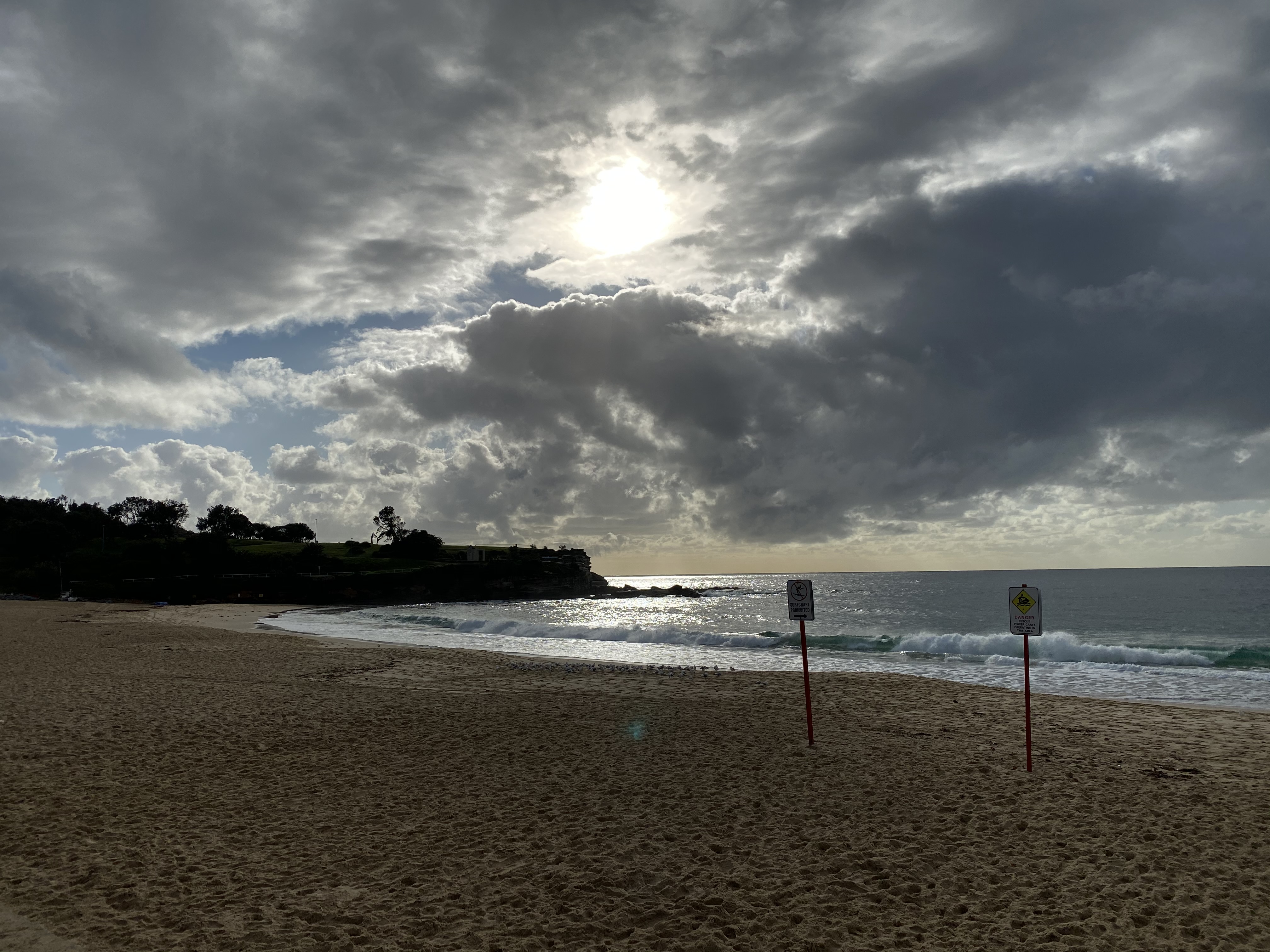
It was summer again today. The sun burned the clouds and dew and mist away, and the people lay on the white sand and frolicked in the waves and laughed, and cars cruised by playing loud music and there was beer and fish and chips. And or a brief moment, everyone who’d lost their jobs, held fears for their future, couldn’t get supplies or was working from home, forgot. For a moment, the world was young again.

Australia, who are you?

AdobeStock_231227507.jpeg

I heard a story the other day from someone traveling through Europe.

When asked by a local what nationality they were, this person replied ‘Australian’.The European turned their back on them and walked away. The traveller said this was the first time they had experienced this. Normally as an Australian they were welcomed with open arms.

The other experience I had was at a networking event filled with small business people from diverse cultural backgrounds. I’m a first generation Australian as were quite a few others. A couple were also new immigrants.

This, I thought, is more like real Australia, not like the white, middle class and middle aged men you see on TV.

‘Best country in the world, Australia,’ two of these men insisted.

‘Is it?’ I wondered. It should be. We’ve been so lucky in many ways.

But rather, I feel shame at being a member of a selfish country that doesn’t care about its poor or homeless, the refugees who legally apply for asylum, the climate that is so obviously changing every year, our animals and plants in distress and decline, the little native bush we have left that’s readily given over to poor farming practices, indigenous Australians’ rights, people with different views, privacy, freedom of speech, freedom of choice over mainstream and alternative medicine, supporting developing countries, public education, women, jobs or the rest of the world except maybe for America.

That’s not quite true. We sort of care. But not enough to do something about these things if it means possibly going against our personal interests.

Instead we are a country that voted against a non-existent death tax, and for share franking to continue when we either had no shares, or because we believed we had a right to avoid paying tax on them so we could give our superannuation to our kids. This is the superannuation already taxed at very low levels to allow for self-funded retirement, thus taking the burden off the state. Me me me over eduction, affordable housing, the economy, infrastructure and aid.

Our identity is as a laid back fair go kind of place. What sort of backbone is that? In any case, there isn’t much that’s fair out there in real Australia, even if there are a million and one rules. We are sexist, ageist, racist and we don’t give a damn about people less well off. I understand the world feels more dog eat dog. I feel it too. But where is the national character in us that says ‘This is not right’? Where is the leader who stands up and is willing to make constructive changes for our future, even if it makes us feel a little uncomfortable? Change is growth and growth can be uncomfortable. Rather, we’re content to tread water and drift backwards.

Australia, I feel, is also a country that reacts with fear rather than finding the courage to follow a vision. In truth, we have no vision. We’d rather knock that down, continuing our unhealthy tall poppy tradition. So we roll over on the things we don’t like and shrug saying ‘Nothing I can do about it’ or ‘I don’t follow politics’. Must protect the status quo.

We have no Magna Carta equivalent and I think we need one that also considers the rights of our first inhabitants. If we properly address our past, we might be better able to build our future. From this process we can forge a stronger identity and define values to guide us during these challenging times.

I used to feel proud in East Timor of the job our soldiers did. I used to feel proud as a diplomat to put forward certain values, politics aside. I’m glad I don’t have to do that now because I couldn’t do it and sleep at night. Compartmentalisation can only go so far.

But getting back to my initial story, while I don’t fully know why the European turned away from the Australian, in my heart of hearts I do. I suspect they might see us as a lucky, spoilt young country that refuses to grow up and be responsible.

And if this was the case, I would agree.

[Before you tell me to go back to where I came from (even though I was born here), I’m writing this because I care. Not because I don’t.]

How long should grief last?

[Written on 26 July]

It’s three years today since my mother died, joining my father in death and  leaving my brothers and I alone, and me the oldest in the family as well as the matriarch. That came a hell of a realisation, I can tell you.  

My mother planned to live until she was in her nineties. But I knew this was unlikely.

Deeply suspicious of the medical establishment, and rightly so given her woeful treatment by male gynaecologists who happily stole her fertility and thrust her into early menopause, she refused to deal with them.

Then when she was forced to, she trusted another male doctor who once again let her down, ironically because he gave her what he thought she wanted even though it meant an earlier than necessary death, which I know she did not want at all. But would he listen? No. He would look at me like some interfering busy body as she told to him time and again the lies she told herself.

But that’s all in the past. What is it that I miss about her today, a day of many challenges?

Perhaps I miss that I have no one and nowhere to go to.  

Not that my mother ever understood me or my problems, or was someone I could easily turn to. I could in theory, but in reality I whenever I tried I found myself feeling more alone than ever, more unrecognised with every attempt. 

I don’t blame my mother for her remoteness. Abandoned by her father in her teens in the worst kind of way, reviled by a jealous and competitive mother, and a survivor of all sorts of childhood travesties including during World War II, she didn’t let that overcome her. Instead she immigrated, had a family and created her dream of being a psychologist. 

I admire and respect that and am filled with awe for her.

She could have been a bitter and angry person, she could have inflicted upon us what was done to her. But she wasn’t and she didn’t. She chose to help people. But with me, we were forever ships in the other’s night, reaching out but finding the other too far away to grab hold of. I could not find her being behind her mask of survival and control. 

Perhaps what I miss today – and what I’ve continued to struggle to come to terms with these three years – is what we were not and what we can now never be. Her once soft belly and warm full breast of the mother of my dreams would never be realised. All those times I called her up and fell mute when she failed to hear me. That time, days before her death, when I cried into the phone that I never truly felt her love other than as some intellectual exercise. Finally she convinced me it was there, and for some moments it finally was laid bare.

Right now I would settle for even for five minutes of the frustration with her. I would get in my car to be with her, a person who despite it all, welcomed me no matter what. 

So perhaps what I really miss is not just her strangled kind of love, but that her death has forced me to grow up. Perhaps I miss being a child. Her death has indeed forced me to be alone at a time when I could very much do with an escape. 

And there it is. There is no escape. There is only, and has only ever been, me. And that is the greatest realisation and hurt right there. That she dared to leave me. That she could never rescue me. That I am alone, just as I always was. And neither she nor anyone was ever going to be able to allay that truth. 

Maybe there is a part of me too that regrets those struggles we had, who wished I wasn’t so busy with my life during her middle years, who wished I had been more generous with my time and made my mother more welcome, who was less driven mad by her incessant self talk.

Perhaps there is part of me also who, with time, has imagined she could have been different, that she could have changed. But the truth is that no matter how hard I tried, she was never going to be different. She could never step into that hopeful void I made for her to step into. 

So as much as all of that, and in the very end, I simply miss my mother. Bravo, mother. Bravo. I love and miss you no matter it all.