Active vs passive voice in writing

IMG_1684

When writing fiction, creative non-fiction and even good non-fiction, writing in the active voice is usually best. Here’s a quick summary of why.

Active Voice

Using the active voice means the subject* of your sentence does the action. In other words it’s someone or something doing something rather than it being done to them. Active sentences are more alive because they’re more direct, succinct and closer. They draw you in.

[*The subject is the who/thing that’s doing something. It’s usually a noun like Jenny or The dog  or a noun phrase. It’s the beginning and main focus of the sentence. The object is the what is being done and follows the verb.]

Passive Voice

Using the passive voice means the subject receives the action. The subject is being acted upon by an outside force. Passive sentences use more words, can be vague and often lead to a tangle of prepositional phrases (which begin with at, in, about, from, with, by).

The passive voice is often used in bureaucratic or scientific writing to take the focus away from individual beliefs or responsibility and towards bureaucratic responsibility or research data. While there are times when the passive voice may be appropriate, by design it’s not engaging writing.

Examples:

  1. Jennygrabbed the knife, turned around and stabbed him. (Jenny is the subject or the thing doing the action. It’s the main focus of the sentence. The object is the knife.)
    The knife was grabbed by Jenny, who turned around and stabbed him.
    (Here, the knife becomes the main focus or subject as it receives the action. Jenny becomes the object as she’s being acted upon.)
  2. ICAN, an Australian-based anti-nuclear campaign, won the 2017 Nobel Peace Prize. (ICAN is the subject or main focus. ICAN won. ICAN was being acted upon.
    The 2017 Nobel Peace Prize was won by ICAN, an Australian based anti-nuclear campaign. (The Nobel Peace Prize is the main focus or subject. The prize was won. The prize was acted upon.)

Active or Passive Voice

In most writing, we prefer the active voice to be prominent. It’s more direct and promotes stronger verbs. Verbs and nouns bring sentences alive and give them power, which makes readers keep turning the page. Also, active writing is more concise, and concise writing is more vigorous.

Passive writing is remote, longer, sometimes ambiguous and readers can easily disengage.

That said, you might not want every sentence to be hard hitting. There’s a place for the passive voice. For example, in crime writing it can be very useful. Also, evasive characters might speak in the passive voice. But use it purposefully. Be aware of why you’re choosing the passive voice rather than accidentally falling into it.

When To Use the Passive Voice

  • To emphasise the action, not the actor e.g. Given how dark and cold the night was, a raging bonfire was lit by campers.
  • To maintain focus on the subject e.g. The weapon used was a long knife.
  • To be diplomatic and avoid naming the actor e.g. The numbers were unfortunately read incorrectly.
  • When you don’t know who did the action e.g. In this case, forensics are the key.
  • To create authority e.g. Dogs must be put on leads.

Converting sentences to active voice

Look for at the word by (e.g. The Nobel Peace Prize was won by…). Rewrite the sentence so that the clause after by is closer to the beginning of the sentence so it becomes the focus. If the subject of the sentence is fuzzy, use a general term.

Helpful reference ‘books’ for writing

IMG_1618.PNGGrammar is the rules or conventions that make the meaning of language and sentences clear.

Many people don’t care about grammar these days. But writing in a clear way by observing these conventions will help you to convey your message most effectively and optimally. The correct use of grammar will also that can help lift your writing into the professional realm, letting people know you’re a serious writer who works at their craft.

There will be times when you want to break the rules of grammar in the name of creativity. Go for it! But it helps to know them first before working out how best to manipulate them.

The five books I find most useful for grammar questions are as follows:

  1. A thesaurus – I use the online Dictionary.com almost every time I write to find synonyms for words I need to repeat. I like how you can click on a synonym in a list to find synonyms for that word until you’ve found the right one. I couldn’t write without a thesaurus.
  2. Fowler’s Modern English Usage – For me this is the bible on all sorts of questions you might have about specific words in both British and American, Australian, South African etc. English. For example, should I write roofs or rooves, is it ok to use ‘didn’t ought to’, what does ‘sic’ mean, what is the English versus American spelling of ‘program/me’, is the correct word ‘strategic’ or ‘strategical’? Make sure you get the latest edition.
  3. The Elements of Style – This book is great for writing rules such as when to place a comma before ‘and’ and ‘but’, slang, redundancy, using the active and not passive voice, verb tenses and mood, and is it which or that? The misused words and expressions section is fun reading, if you like that sort of thing. This book is priceless.
  4. A dictionary – I’m Australian and we generally speak British and to American English—although that’s eroding—so I use the Macquarie dictionary. It includes Australianisms  that other dictionaries don’t. Find the best dictionary for you in the version of  language  you want to write in—either online or physically. This is particularly important during the rewriting/editing/proofreading stages.
  5. Style Manual – This is an Australian Government book that I use for writing and editing advice. When I’m unsure about punctuation such as when do or don’t I include a comma in a string of adjectives, should I use a colon or a semi-colon, where do I place quotation marks, when do I use an en, em or 2-em dash, or hyphenation, then this is my go-to reference book. Very handy and easy to use with its detailed index.

To quote Winston S Churchill again, ‘This is the type of arrant pedantry up with which I will not put.’

Persistence beats talent

IMG_1615.PNG

All the writing talent in the world is meaningless if you don’t stay the course. You must apply ‘bum glue’ to adhere you to the process of producing work, consistently, relentlessly and unconditionally.

For many people, writing is hard and good writing—where readers are inspired to read on and recommend your work to others—is even harder. Often there are few rewards, at least initially. Yet most of us are conditioned, through education and parenting, to expect benefits for our efforts. With writing, we may need to endure years without recognition,  remuneration or reward.

At times, the process becomes mired in negativity. For example, submitting work to agents and publishers often results in rejection. Even if you don’t submit to agents and publishers and self-publish, there’s no guarantee your e-book will sell. There are days too when you realise that despite your efforts, your work isn’t where you want it to be.

The hardest times, or crises, are often turning points that shape your writing self. But how do you keep going when you feel like giving up? The answer is through rabid determination. Here are some specific ways that might help:

  • Acknowledge that writing is something you do alone in a room – Michael Ventura wrote this brutally honest and powerful piece on writing saying ‘The only thing you really need, is the talent of the room’. He explains that the ability to sit alone in a room and write day after day is the main talent a writer needs. Without it, no words will be produced and natural talent is rendered useless.
  • Identify your writing passion and root yourself in it – Ask yourself ‘Why do I write?’ Write it down and insert it in the header or footer of your work or stick it up around your writing space. When times are tough—e.g. you’ve just received your twentieth rejection, your current project isn’t working and you don’t understand why—you’ll be able to read that sentence, remember what it is you love about writing and continue.
  • Imagine what it’s like not to write – How does that make you feel? You don’t have to write, it’s a choice. Are you really a writer? Find your truth.
  • Get zen and let go of expectations and conditionality – Write to achieve your best work, whatever that is right now. You might dream of fame and fortune, but learn to appreciate the process for what it is in this moment. For every writer, there are times when persisting is the main reward. Despite what some people espouse, good things rarely come to us easily.
  • Create a REALISTIC strategic plan for your current writing project
    • Begin with defining your goal. Your goal is the primary high-level outcome you want to achieve for your writing project e.g.
      • To publish my work in the next 18 months (be specific and choose a date)
    • Now define your strategy or your approach to achieving your goal e.g.
      • Complete my MS over the next 9 months (specify a date)
      • Determine the optimum publishing method/s for my work
      • Find a writing group so I can share my work and gain support
    • A tactic is a is a measurable step you take to achieve your strategy e.g.
      • Diarise 2 hours of writing 5 days per week and stick to that
      • Or write 5k words per week
      • Install software on my computer so I don’t get distracted by emails and social media
      • Find 5 agents and 10 publishers who might be interested in my work and send my work to them
      • Or take a course in self-publishing.
  • Stave off boredom and failure through continual learning – Every writer can always improve. Take courses, seek constructive criticism (see this post), and read, read, read to learn how to overcome obstacles and renew your inspiration.
  • Write anyway – Push your doubts, fears and hopes aside, move away from self-doubt, self-pity and negativity and see what happens if you simply apply yourself. Write your way out by using that bum glue.
  • Seek moral support – Read blogs such as this and find interviews with authors where they explain their struggles. This helps you to realise that many of those so-called overnight successes worked at it for years. It also reaffirms that you’re not alone.

In the words of Winston S Churchill:

‘Never give in. Never give in. Never, never, never, never—in nothing, great or small, large or petty—never give in, except to convictions of honour and good sense. Never yield to force. Never yield to the apparently overwhelming might of the enemy.’

The value of constructive criticism in writing

IMG_1593.PNG

If you’re to succeed in writing—if success means writing your best story—then direct feedback (otherwise known as criticism) is invaluable, essential even.

But it’s a tricky thing. No matter how motivated you are to improve your work, criticism is by definition judgemental and aims to find fault (in the pursuit of improvement).

Here are some tips to surviving feedback or criticism, without losing the will to write. Above all, remember no work will ever be perfect and all criticism is subjective:

  • Be open to learning, but listen also to your gut. Your story is ultimately your work and your responsibility. Feedback is about teaching you about the strengths and weaknesses in your writing so you can learn the techniques to get your story across better. Don’t be defensive or hasty. Let the criticism settle before deciding whether it’s useful or not.
  • Before you seek feedback, ensure you’re in the right writing phase. This usually means you have a complete draft (not necessarily your first) and are about to rewrite. Some people can write a chapter and get immediate feedback, but for many, criticism too early can stifle their creativity. More on that in this link.
  • Here are some ways to get feedback at varying points of your draft. Some cost money, but not all:
    • Join a writers’ group – Find a local or online group, start one with like-minded writers or find one through a writers’ centre. Perhaps you want to join a group that only writes in your genre, or one that spans many genres. It’s critical to ensure the group is positive and constructive and that members want to help and support your writing, not destroy it. Avoid personalities who seek one-upmanship or are socially illiterate, which can be common. Trial several groups if you need, but don’t settle until you’re satisfied.
    • Find a mentor – This is a tricky relationship that seeks to balance trust with criticism. If you find the right person it can be powerful. Ensure you get along with them and that you’ve agreed on the process beforehand. Some mentors only want to see a finished product while you might want to feed them 5 chapters at a time.
    • Get a manuscript assessment – This is a 10-12 page report that covers everything from style, voice, structure, character, the opening and so on. Compared to hiring an editor, manuscript assessments are a relatively inexpensive way to receive professional comment on how to improve your story. There are publishers who require one before even looking at your story. Again, find the right person who understands, but is not limited to, your genre.
    • Hire an editor – This is the most costly option but you’ll learn most from hiring and editor as you’ll get a line edit on top of a full structural edit that looks at character, voice etc.. Finding the right person is always important. Ask for a free trial first to see if you’re a match e.g. the first 3-5k words, to ensure you’re on the same page (ha ha).
    • Find beta readers – Some writers ask others to read their near-finished work and give feedback. These people usually read in the same genre and won’t be afraid to tell you the truth. Beta reading is not normally paid, but there are some paid services out there not (be careful!). Be clear what you want from your beta readers but remember, they’re not professionals. High level comment is best e.g. did the story flow well, were there any slow sections, were the characters believable, what did you like and dislike most? Be warned, beta readers can be notoriously unreliable.

You could go on improving your story forever, so there’ll come a time when you’ll have to publish, in whatever form you choose. That way you can move on to the next story. We learn to write each story, and each one requires different tools, and so we continue along the learning trajectory—or is it cycle?—of writing.

Back Story. Should you or shouldn’t you?

IMG_1400.PNG

Back story is difficult. It’s essentially what the writer wants you to know about their character – the who and why – but what the character them self doesn’t get the opportunity to tell you.

Some writers and editors say cut it out altogether because it’s telling (not showing) and interrupts the flow of your story by taking readers out of the action.

I’m not of that view, but if you’re going to use it, here are some ideas on how to make it most effective:

  1. Break backstory up into short paragraphs or even sentences such as asides. That way you’re inserting interesting tidbits as the story moves on rather than great chunks of history that make readers fall asleep, or worse still, put your story down for good.
  2. Be sparing. Decide what it is you really need to say about the character. This way you can pare back four paragraphs of backstory into one concise, powerful and to the point paragraph or less.
  3. Pace your backstory so it’s eked out over the entire story rather than appearing in one chapter early on, which is a real trap. That way you’re using it to build and reveal character slowly.
  4. Also ensure a balance between backstory and the present moment. Backstory should be used sparingly. Did I say that already?
  5. Link backstory to action. Maybe your character is having a crisis of confidence so you flashback to an incident or summarise their family history to explain where this behaviour came from.
  6. Ask yourself if instead you can include backstory by having your characters say something to another character. That way the reader learns about their history but in the context of the present moment.
  7. Make backstory in deep point of view,  not authorial. It needs to be in your character’s voice with their emotion so it’s meaningful and not a history lesson.

I’m off to cull and disperse more backstory in my MS. Good luck!

How to write again after a break

IMG_1382.PNG

For whatever reason you’ve had a break from writing. Perhaps life happened, you had a holiday, you felt burnt out or were just sick of your own words. Writing breaks can be good as they can:

  • Re-energise and refresh your writing enthusiasm
  • Give you a new perspective 
  • Re-inspire you
  • Allow your subconscious to solve writing challenges
  • Make you miss and remember why you write
  • Heal or prevent burnout

But how do you get back into it? The page seems daunting. You re-read what you wrote before and you aren’t sure if you can write that well again (It was a fluke. Not!). Or perhaps you don’t like what you wrote and it hits you that there’s more rewriting to be done.

Here are some ways to get back into it:

  1. Do morning pages, even if only for a few days or a week. They really are the way back into creativity versus rote writing. I’ve written about them here.
  2. Just do it. Take a breath, sit down (or stand if you’re like me) and begin. It may not be as bad as you think.
  3. Write something, anything to get your juices flowing again. A journal, a short but rich descriptive piece about your cat or big toe, a room or people you’ve watched in the street. A few paragraphs will do.
  4. Copy a page from one of your favourite author’s books. This is always a good way to get our writing going no matter whether you’ve had a break, need inspiration or want to take your writing up a notch. It’s a good way to learn from others you aspire to.
  5. Don’t forget to read good writing. That’s always motivating.

Don’t forget to have fun. You write for a reason, because you want to, you need to. Remember and honour that.


One writer’s rules. What are yours?

IMG_0474.PNGSome of mine off the top of my head include:
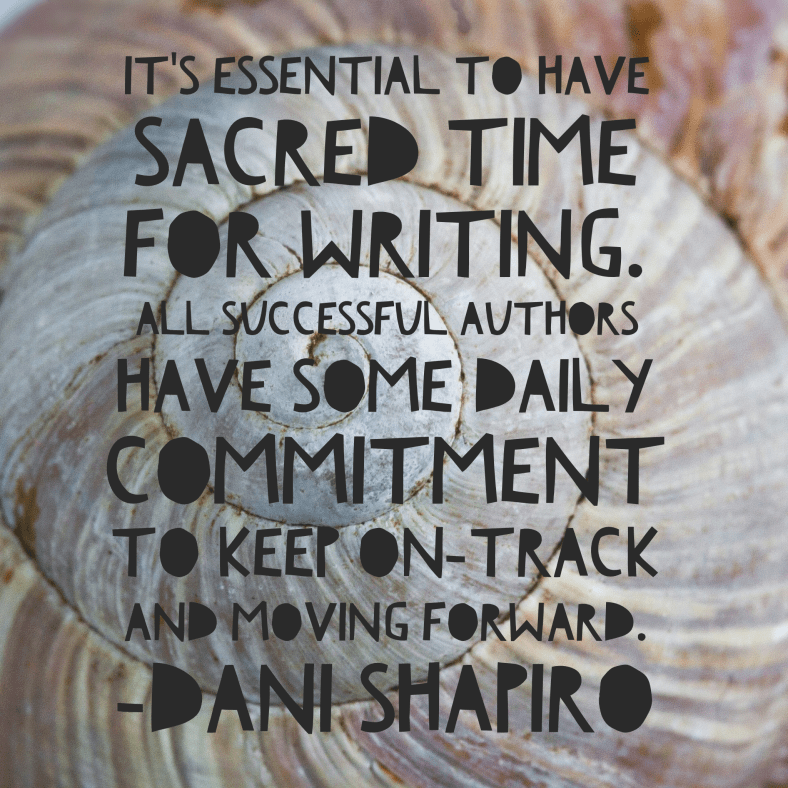
  • Write even when you don’t feel like it. Often you can turn that around
  • Write regularly
  • Trust YOUR writing process, no one else’s
  • Sometimes down time is writing too e.g. problem solving, fermenting characters, problem solving
  • Writer’s block means something is wrong. Listen, learn and overcome
  • Constantly challenge yourself to improve
  • Get feedback for your work from supportive people, experts perhaps or a writers’ group
  • Read, read, read good writers inside and outside your genre as well as writing books. INVALUABLE!
  • Write for you, not for anyone else or fame or money and so on
  • That said, your drafts should move from writing to get things out of your system out to considering your reader
  • Enjoy writing. Again, if you’re not, look for what’s going wrong and change that.

Writing multiple books at the same time

IMG_0472.PNG

Should you write multiple books at the same time? Perhaps you have ideas and characters bursting out of you. Or you have two or more stories of equal importance.

I believe it’s possible under some circumstances to write two manuscripts at the same time, but with some clear boundaries.

That said, there are circumstances where your writing energy would be better spent getting one project to a certain finished point first. How do you know?

If you can’t stop yourself from writing more than one book at a time, here are some guidelines:

  1. Your manuscripts must be very different. Perhaps one could be non-fiction and one fiction. Perhaps one could be crime and the other literary fiction. This way it will be easier not to diffuse your writing energy.
  2. Your manuscripts must also be at different stages. For example, you could be having a break from a first draft manuscript while your beta readers are looking at it or you’ve put in the drawer to get some distance. Alternatively, one could be at the plotting or first draft stage with one and on your third rewrite with the other.
  3. Make sure you have the energy for each story. If not, then go back to your priority story and let the other sit for a while. Trust that it will be developing in your head as you work on your priority manuscript.
  4. Your stories are part of a series. In this situation, you might find it natural to work on more than one part in the series, as long as you have a clear idea where they’re going and one doesn’t constrain the other.

But if like many people working on two manuscripts means you’re diffusing your energy, there are ways you can keep your non-priority project alive.

  1. Keep an ideas book and jot down your ideas so you don’t lose them. Keeping them on the back burner doesn’t mean you can’t develop them. Often they are stronger for this.
  2. You can even develop your plot and characters so that when it’s time to write this story you have a lot of preliminary work completed.
  3. You could also do research while you’re working on your priority manuscript. Again, more work will be done so you hoe straight in to the next book when the time is right.

Good luck fellow writers. Remember, never never never give in. Keep on learning and improving.

Should you write every day?

IMG_0345.PNG

I’ve been tussling with this one for a while. Some people are happy writing when the mood takes them and produce plenty of work they’re satisfied with. Others find weekly word quotas work for them. I thought I was one of those people. But if that’s the case, why did I struggle to get back into my manuscript after a weekend break?

Over the last two weeks I’ve attempted to write every day, which I largely managed except for one day. Here are the things I discovered:

  1. Writing is a committed relationship
    When writing a story, whether fiction or creative non-fiction, it’s as though you’re in a long-term relationship with your characters and story. By dedicating daily time to spend with your work you’re remaining connected. That means it’s easier to pick up where you left off the previous day. Your work is fresh, alive and growing, like a plant you have to water daily for it to thrive. Also, the characters and story stay with you, which means you’re more likely to be working on them at a subconscious level. It’s all about maximising your flow.

    The other point about writing being a committed relationship is that if you treat it well like you would a loved partner, your writing becomes less like work and more like fun. With your story and character connection strong, you’re happier to nurture and spend time with them. This has to be a productive thing.

  2. Set time aside, even if you don’t write
    By setting time aside every day, be it half an hour or two, you’re allowing the possibility of writing to happen. You’re receptive and open to the possibility, like you’ve put the kettle on or wine bottle in the fridge in anticipation of a good friend’s visit. This is about giving your characters permission to speak and allowing your story to move forward as it needs. Perhaps they don’t turn up on the day, but by creating the space you’re extending a welcoming hand. You never know what might happen.
  3. Form the habit
    There are loads of myths out there about how many days of repeating something it takes become you form a habit, but my research showed the correct number is sixty-six. If writing becomes a habit, you’re more likely to do it regardless of your mood or circumstances or other forms of resistance. Do first, think later.
  4. Write little and often
    You’ve probably heard the maxim that goes something like, ‘Don’t write a lot, but write often’. I’ve been doing a lot of this—an hour’s writing, half and hour of something else, another half an hour of writing and so on. For me it takes the pressure off having to sit down for hours, taking on large chunks of work, big themes and major events etc.. I can attack my work in bite-sized pieces and come back refreshed and willing to write the next bit.
  5. It feels better
    Writing is an outlet and a purpose, and on the days I write I simply feel better. I feel more me, more grounded, more satisfied. I’m not sure I’ll write every day, but most days seems to work well for me at the moment. Try it for yourself.

How long’s a piece of string or how many REWRITES should you do?

IMG_0312.PNG

You thought your novel was finished. Did you send it out to publishers who rejected it? Or did you put it away for a while like you’re supposed to and realised months later it needed more work?

What to do? This is the point where plenty of people self publish. If you’re convinced — and others in the know are too — that your novel is ready, then go ahead. But if you see problems with your manuscript and are serious about your writing (as in you want to continually improve it), you have other options.

You could shelf it. You could see your story as a learning experience and move on to the next project with a sense of liberation. On the other hand, is there a voice in our head niggling at you to keep going until you get it right? Perhaps your story is too good to let go or you’re simply stubborn that way.

1.  Should you rewrite?

Recently I’ve been considering whether to rewrite my first novel again after already having rewritten it twice. I’ve had six months away from it, which has given me a new perspective on its strengths and weaknesses. 

There might be things you can learn by rewriting and improving your novel. For example, in writing my new novel I’ve been working hard on improving my style and other aspects of craft, which I could apply to my old story.

When discussing this with a friend, however, they suggested that after three versions and much time, I should give the old story up and move on; I should focus instead on finishing my current novel. Are they right?

2.  When should you let your manuscript go?

There are situations when you might consider giving up your novel such as:

  • You can’t finish the story, it ran out of steam and there’s nowhere to go
  • You’ve lost your passion for it and you can’t get it back even though you’ve honestly looked at everything that might be blocking you such as structure, style, voice, character etc.
  • It’s just not working despite having rewritten it umpteen times. Perhaps you’re too close to the story or you’re being held back by the first draft, which you wrote when you were less experienced
  • It’s destroying your love for writing after many attempts at rewrites. Ask yourself, is it worth it?
  • You’ve put it away for months, tried to rewrite it and you have nothing more to give. Your story is dead.

I’m not at the point where I’m ready to let go of my first story. So what now?

3.  How to rewrite your story for the umpteenth time and not lose your will to write:

  • Apply new craft skills such as  improving dialogue, heightening conflict, adding nouns and verbs, creating a compelling first page, showing not telling and so on. Really get into the words and challenge your grasp of technique. I love this stuff, even if it’s hard. It keeps me from getting bored.
  • Change your manuscript sufficiently so the process becomes engaging again. Don’t just edit, which is where you tighten your manuscript by moving line by line from the beginning to the end. Rewriting involves meatier processes like adding, subtracting or deepening characters, making structural changes such as moving chapters or the order of events, and cutting large sections. Rewriting involves prioritising problems by issue, not fixing the smaller stuff in a straight.

I’ll let you know how this goes in six month’s time. I’m encouraged by author Richard Flanagan’s struggle with his Man Booker prizewinning novel, The Narrow Road to the Deep North, which took him numerous attempt over many years in various formats before he created something he considered publishable. The story was problematic, I suspect, because it was close to him, which is my challenge too.

My only decision now is should I burn/trash every single earlier version like he did before starting afresh? This sounds dangerous and scary, but possibly liberating. What do you think?